Institute of Information Theory and Automation
The Czech Academy of Sciences
We conduct basic and applied research and educate in Artificial Intelligence, Signal and Image Processing, Systems Science and Applied Mathematics.


Artificial
Intelligence
Artificial Intelligence is a transformative field focused on developing algorithms and models that enable machines to perform tasks typically requiring human intelligence. We integrate AI into all research areas pursued within the Institute, specializing in machine learning, natural language processing, knowledge representation, econometrics, and computer vision.

Signal and Image Processing
Signal and Image Processing is a field that focuses on the analysis, transformation, and interpretation of signals and images to extract meaningful information. We are engaged namely in texture analysis, image restoration, blind deconvolution, superresolution, and video tracking, and we also transfer the developed algorithms to embedded devices.

System
Science
Systems Science is an interdisciplinary field that studies complex, dynamic and adaptive systems, their behavior, and the principles governing their structure, functioning, and evolution. It provides a holistic framework for understanding how different components within a system interact to produce the system's overall behavior.

Applied
Mathematics
Applied Mathematics is a huge field where mathematical methods are applied in various areas of human activity. We are involved namely in probability theory, applied statistics, data and analysis, calculus of variations, optimization theory, continuum mechanics, and econometrics.
News
05/22/2026 Visit of the President of the Czech Academy of Sciences to ÚTIA
20/05/2026On Friday, 22 May 2026, our Institute will welcome the President of the Czech Academy of Sciences, Radomír Pánek, together with all Vice-Presidents of the Czech Academy of Sciences. This visit represents an important occasion for our Institute and an opportunity to meet directly with the leadership of the Czech Academy of Sciences.
Read more05/19/2026 KIST–UTIA Workshop on AI-Enabled Biomedical Imaging and Intelligent Healthcare Devices
07/05/2026On 19 May 2026, the Department of Image Processing at the Institute of Information Theory and Automation (UTIA) will organize a one-day workshop in cooperation with the Korea Institute of Science and Technology (KIST) within the Mobility Plus programme. The workshop will focus on the use of artificial intelligence in biomedical imaging and modern microscopy, particularly in the analysis of microscopic images and intelligent healthcare technologies. Its aim is to connect researchers from both institutions and present the research topics pursued by the participating teams.
Read moreUse and Misuse of Artificial Intelligence in Imaging, Medicine, and Forensics
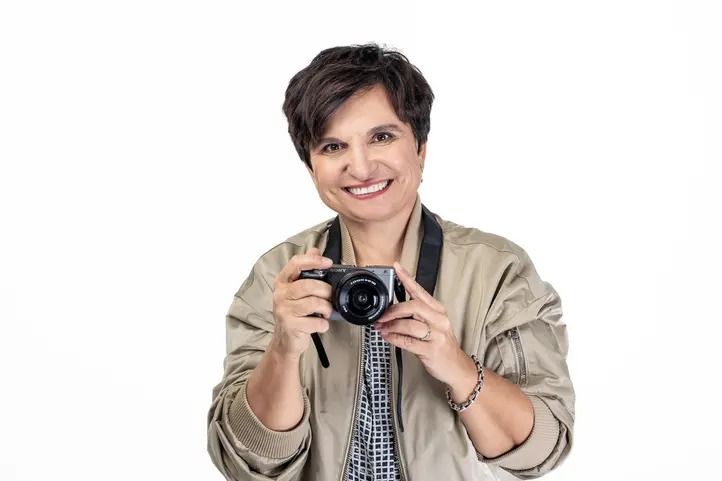
04/05/2026A interview featuring our colleague Doc. Barbara Zitová from the Institute of Information Theory and Automation of the Czech Academy of Sciences has been published by Seznam Zprávy. In the interview, she discusses how artificial intelligence is transforming a wide range of fields, including medical imaging, forensic analysis, and art restoration. In these areas, AI can significantly enhance the ability to process and interpret complex visual data. At the same time, she highlights the growing challenges associated with the misuse of AI technologies—particularly the creation of highly realistic synthetic content such as deepfakes.
Read more29/04/2026 Interview with Igor Velčić: Applied Mathematics, Homogenization, and Thin Structures
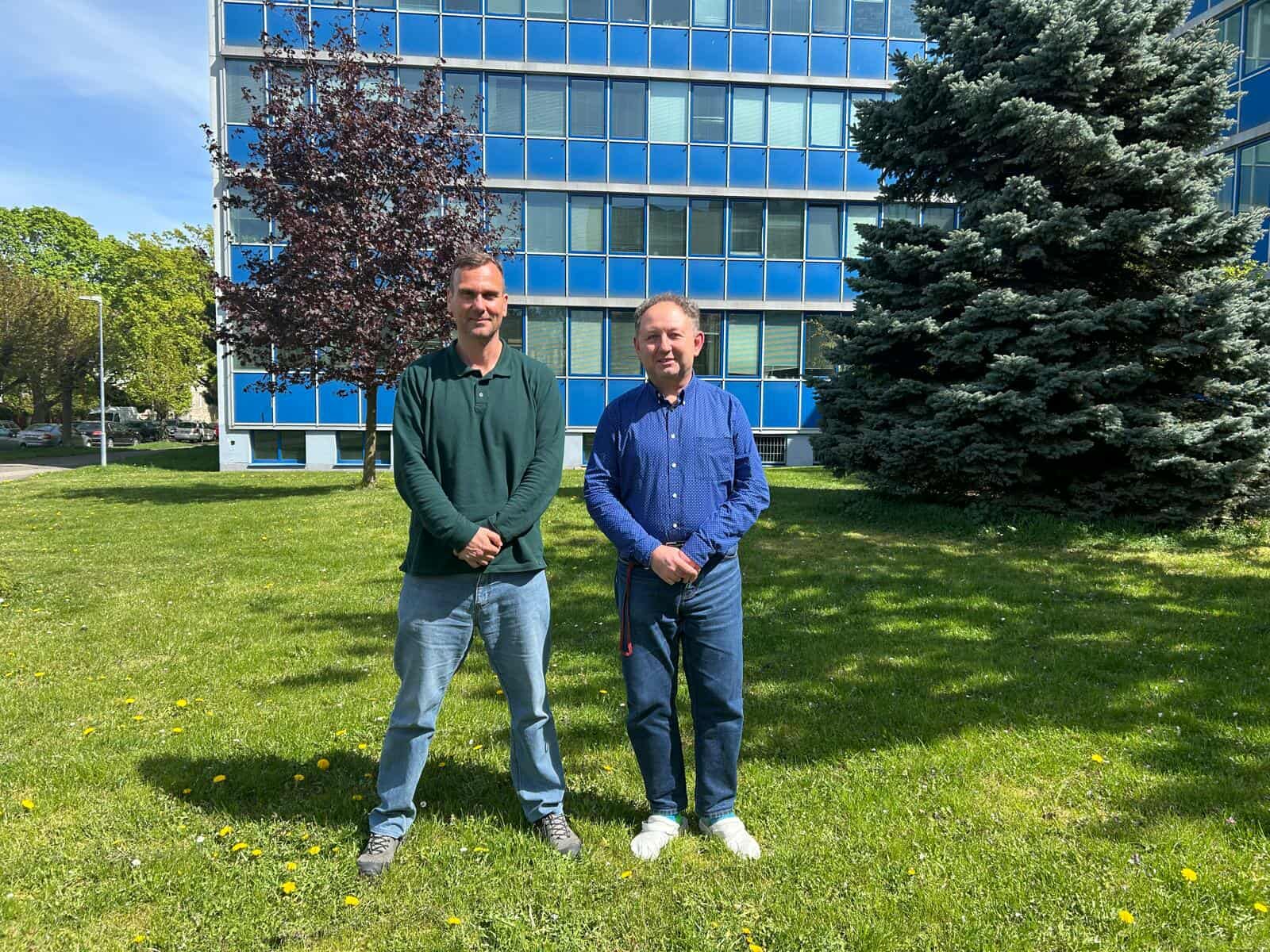
04/05/2026In April, we welcomed Igor Velčić from the University of Zagreb, (Faculty of Electrical Engineering and Computing) to our institute. During his visit, we discussed his research in applied mathematics, focusing on homogenization and modeling of thin and composite structures. In the interview, he explains how mathematical models help us understand complex materials and systems—from engineering structures to medical applications such as stents, small mesh-like devices used to improve blood flow.
Read moreMartin Kružík awarded CISM–Città di Udine International Research Fellowship 2026
29/04/2026Prof. Martin Kružík from the Department of Decision-Making Theory (UTIA), Czech Academy of Sciences, has been awarded the 2026 CISM–Città di Udine International Research Fellowship together with Prof. Giuseppe Tomassetti (Roma Tre University, Italy). The fellowship is granted by the International Centre for Mechanical Sciences (CISM), an international research and training centre based in Udine, Italy, which supports advanced research and collaboration in mechanics and related fields. The awarded project, “Dimension Reduction for Magnetoelastic Composites: Rigorous Derivation of Rod Models via a Single-Field Formulation,” focuses on theoretical aspects of magnetoelastic materials and contributes to the understanding of their behavior through rigorous mathematical modeling.
Read more04/30/2026 MTR seminar: Geometry-oriented Measures of Dependence
24/04/2026The Department of Decision-Making Theory is organizing a seminar featuring Dr. Anatoly Khina from Tel Aviv University (School of Electrical Engineering). The seminar will take place on April 30, 2026, at 14:00 in room no. 203. Abstract: One of the fundamental problems of statistics and data science is identifying and measuring dependence. This problem dates back to the works of Bravais, Galton, and Pearson in the 18th century on dependence measure design, and to the work of Rényi in the late 1950s on axiomatizing the desired properties of such measures. For discrete random variables, categorical dependence measures—primarily those based on Shannon's mutual information and entropy, and maximal correlation—are valid choices when only the information content is important. However, when some possible underlying physical interpretation is of the essence, other measures need to be sought after. Consequently, much effort has been put into both the design and property axiomatization of such de
Read more


Welcome to UTIA
Let the director doc. RNDr. Jiřina Vejnarová, CSc.
give you a tour of the Institute (in Czech)
UTIA in the Strategy AV21
Hopes and risks of the digital age: prof. Ing. Jan Flusser, DrSc. presents a large-scale successful project, through which the Institute joined the AV21 Strategy programme (in Czech)